Showing posts with label Preserves. Show all posts

Thursday, 4 November 2021

Sweet Orange Pickle

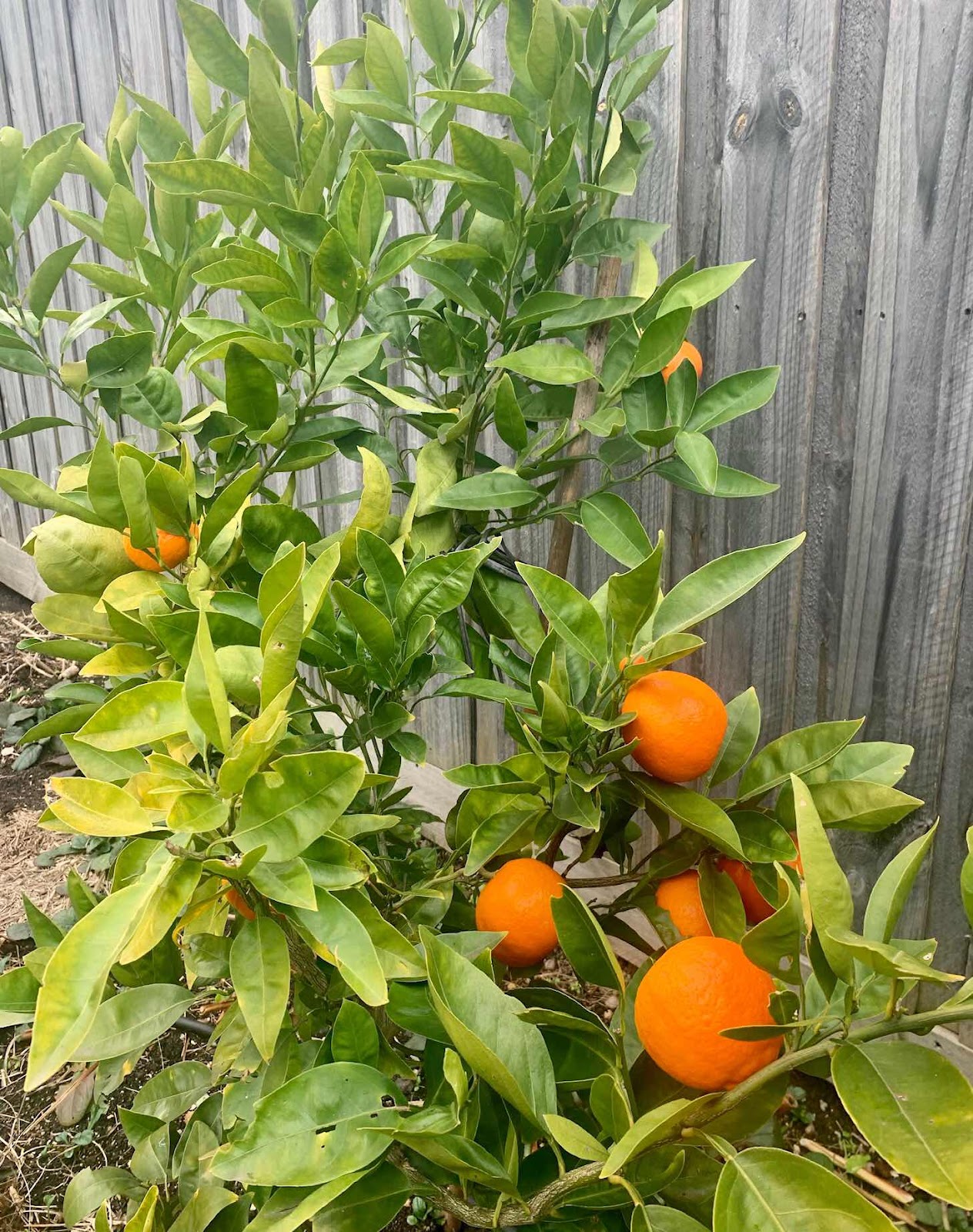
It has been a great year for our relatively newly planted oranges and tangelos and although still very small they have been very productive. 


With so many oranges there were plenty for me to indulge in freshly squeezed juice which was added to the daily grapefruit juice. The downside of juice is lots of citrus shells that need to be either composted or put into the green waste bin. I am not one to waste if it can be avoided so decided that I would attempt an Indian style pickle or chutney with them. 


My daily orange is squeezed, then cut up into eighths and placed in a container in the fridge. A week’s orange shells will usually be enough to make a small batch of Sweet Orange Pickle.

Sometimes I save and freeze the oranges and make a double batch. 


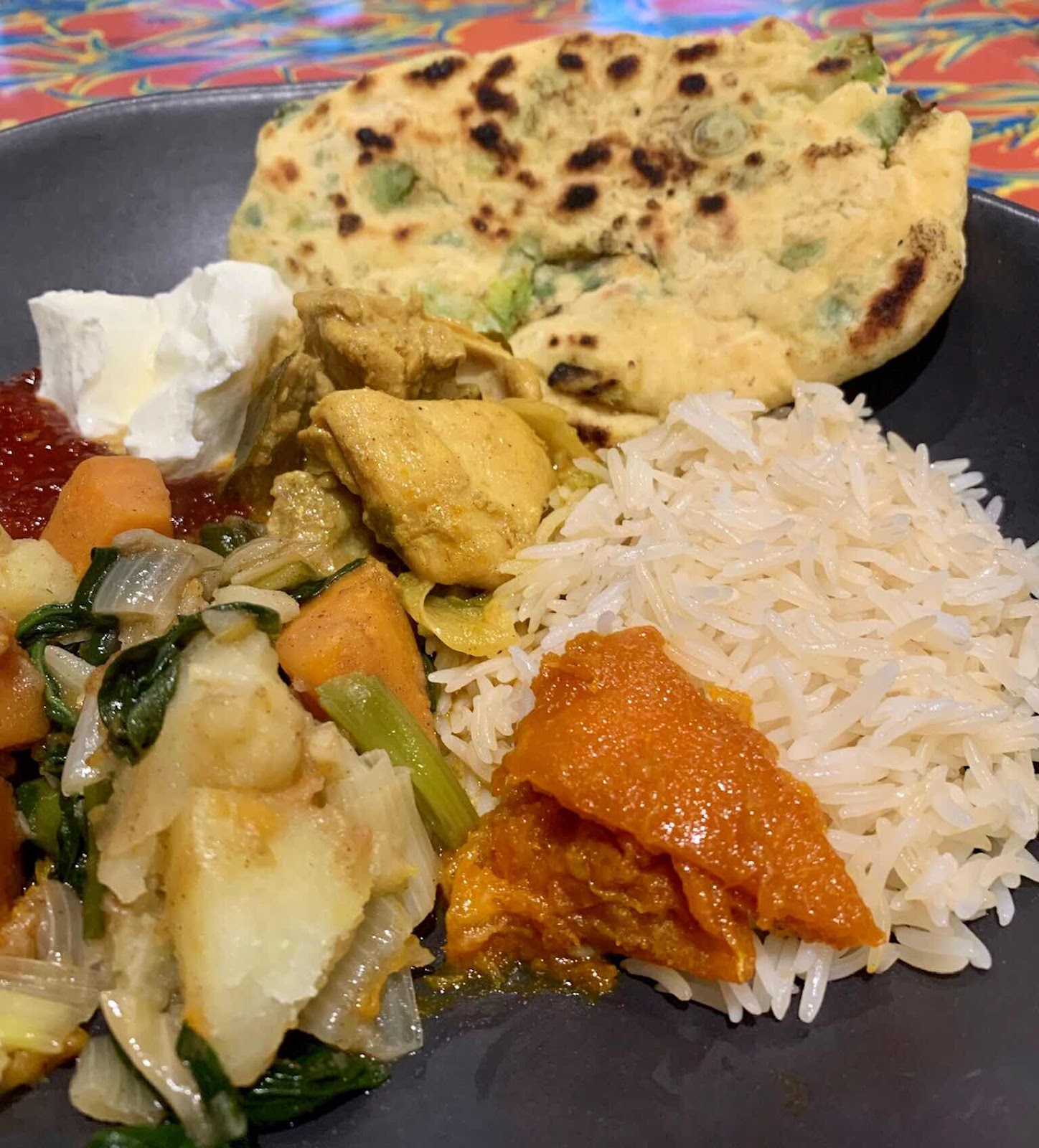
This preserve is great served with Indian curries and Moroccan dishes, a small spoon served on the side adds another layer of flavour and a bright splash of colour.


Sweet Orange Pickle


 Step 1

750 g orange shells

1 tablespoon salt


* I mostly use the squeezed shell of the oranges from my morning juice and save them in the fridge until I have enough


Step 

Oranges from step 1, rinsed

1 cup brown sugar

3 tablespoons  apple cider vinegar

1 tablespoon turmeric powder

1 tablespoon sweet paprika powder

1 tablespoons of salt


Optional - 1 teaspoon dried chilli flakes

Optional -1/2 teaspoon of asafoetida powder

Optional – 1 teaspoon of citric acid for extra tang


Method


Step 1

Wash and chop the citrus into small/ bite sized pieces, they can also be sliced as for marmalade.

Place chopped oranges in a non reactive bowl (stainless steel, glass or plastic), add the salt and mix well. Allow the oranges to stand for 24 hours. This will draw any bitterness from the pith.

Drain of liquid, rinse well and drain again. 


Step 2

Combine oranges and remaining ingredients in a saucepan. Bring the mixture to the boil and then simmer for 20 -30 minutes or until thick. Stir often as it will tend to stick as it thickens.

Spoon the pickle into sterilised jars, cover with Kleerview/cellophane covers and seal with a lid.

This will make one large jar or two small jars.


Saturday, 4 September 2021

The Ever Bountiful Citrus

 A few years ago we planted up a wall of citrus trees; a lime, two oranges, a grapefruit, a tangelo and a mandarin. We also have two dwarf Meyer lemons in pots. Happily they have established and this year were mostly very bountiful. Unfortunately, the lime did not produce as well despite being the biggest tree and planted the longest. Thankfully, I have a few friends whose limes went gangbusters and were happy to pass on lots of limes.
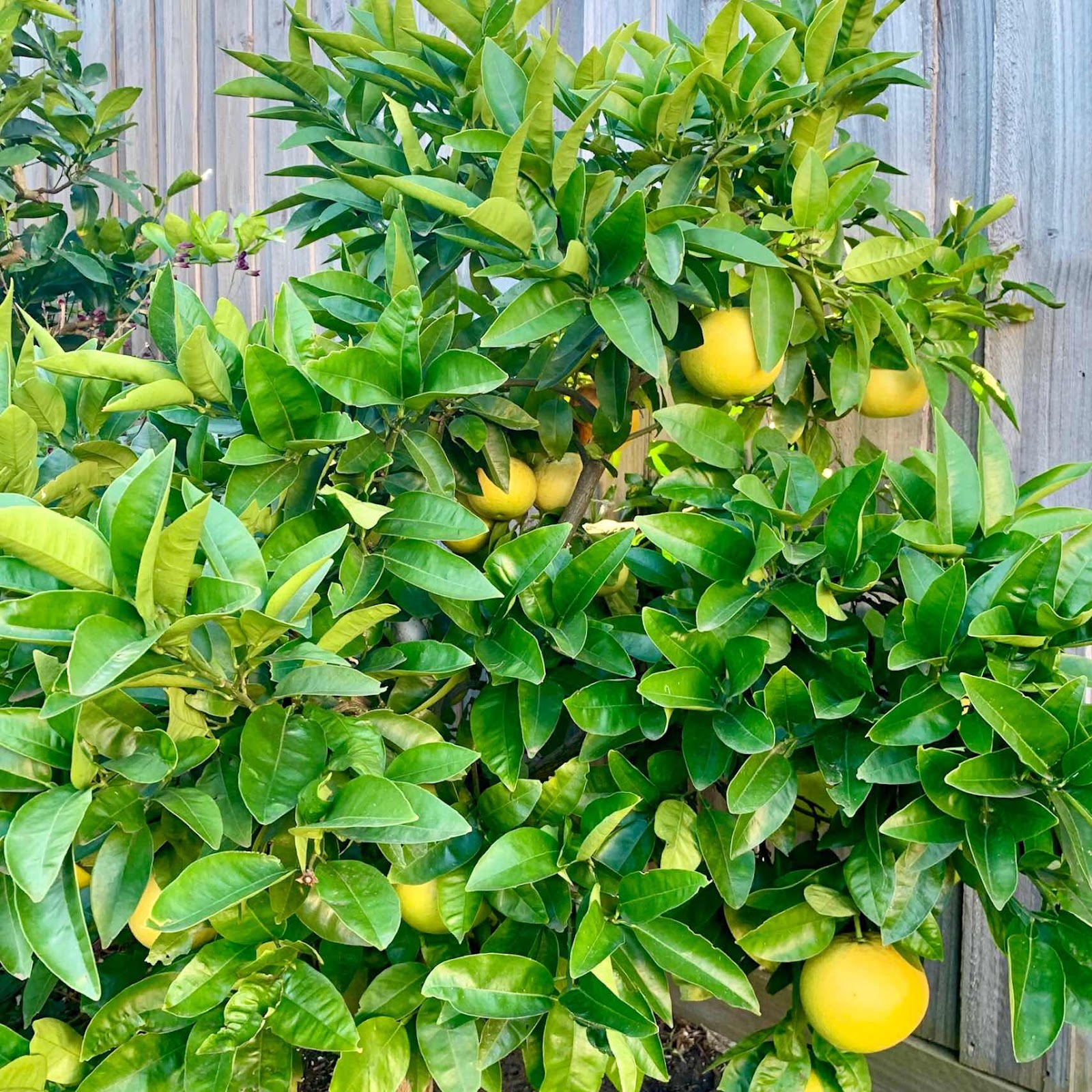


Whilst I have many recipes in my collection these two have become favourites in my collection of citrus related recipes, both are relatively quick and easy to make.  The lemon syrup cake I make over and over and often substitute oranges, tangelos and mandarins for the lemons or use a mixture. This also applies to the Sweet Citrus Pickle. 


At this time of the year a bowl of lemons and limes seems to a permanent fixture on the kitchen bench or table.


Obviously channeling all the lemons, the love of citrus has extended into these small postcard artworks, made as set of three for an year long food themed exchange. 


My grandson Oscar loves helping with the icing and was keen to carefully place the ‘giant sprinkles’



The cake is adaptable, I have made it up as a loaf, round cake, in a ring tin and as cupcakes.
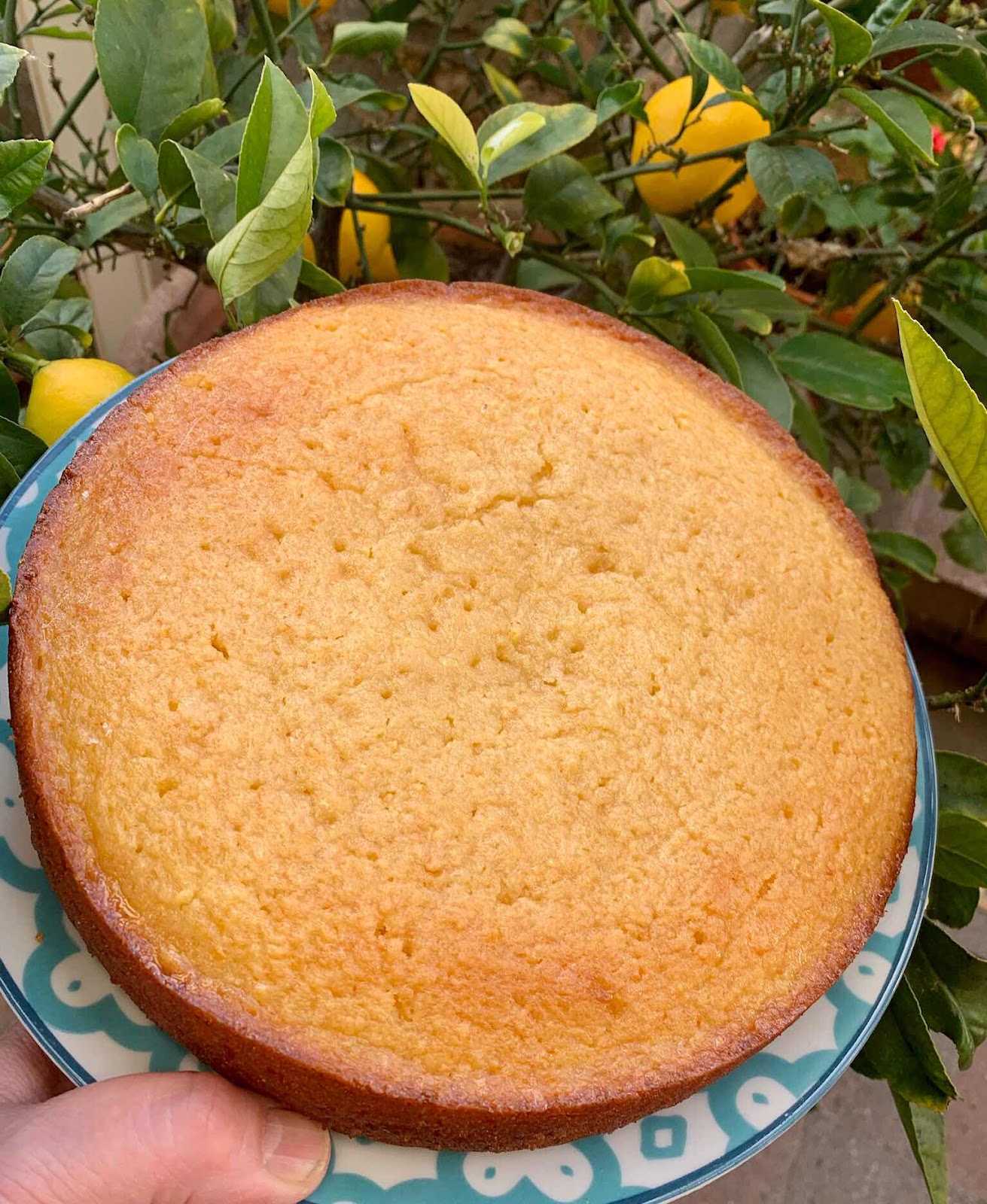


Lemon Syrup Cake

Quick mix / food processor

Ingredients for Cake

4 lemons, I use Meyer.

250 g  butter

4 eggs

1  1/2 cups caster sugar

2 cups SR flour or 2 cups flour sifted with 1 tablespoon of baking powder


Lemon Syrup

1/2  cup lemon juice

1/2  cup sugar


Combine juice and sugar in a small saucepan and stir and boil until slightly reduced and a syrup.


Method

Preheat oven to 160 deg C, grease and line base of a 23 cm round tin. I have also used this to make two smaller cakes, cupcakes and a large loaf tin.

Remove the ends from the lemons cut into four   lengthwise, remove the central piece of pith and seeds. If the lemons have a lot of pith then peel the skin from the lemons, remove and   discard the pith. Too much pith will make the cake bitter.

Place prepared lemons in a saucepan, cover with water and bring to the boil. Drain and allow the lemons to cool.

Place the cool lemons and sugar in a food processor or use a stick blender and process until pulpy and the skin is broken up into fine flecks.

Add the butter and process again.

Add the eggs and give a quick quiz, then add the flour.

Spoon the cake batter into the prepared tin.  Bake until cake is set and starting to shrink away from the sides of the tin, approximately 50 -60 minutes.

Remove the cake from the oven and pierce all over with a skewer. Brush with warm syrup a few times to allow the syrup to slowly penetrate the cake, remove from tin and brush syrup around the sides.

Variation

Ice with lemon or orange icing or a drizzle with a watered down icing or glaze.

*Use lemons, mandarins or oranges, keeping the prepared weight about the same.


This is a quickly made small batch preserve. It is great when served as an accompaniment to curries along with other pickles and chutneys. This preserve can be used immediately.


Sweet Citrus Pickle

Step 1

750 g citrus (limes, lemons, oranges)*

1 tablespoons salt


* I often use the squeezed shell of the oranges from my morning juice, save in the fridge until you have enough

Step  2

Limes from step 1, rinsed.

1 cup brown sugar

3 tablespoons  apple cider vinegar

1 tablespoon turmeric powder

1 tablespoon sweet paprika powder

1 tablespoons of salt

Optional - 1 teaspoon dried chilli flakes

Optional – 1 teaspoon of citric acid for extra tang


Method

Step 1

Wash and chop the citrus into small/ bite sized pieces.

Place chopped limes in a non reactive bowl (stainless steel, glass or plastic), add the salt and mix well. Allow limes to stand for 24 – 48 hours. This will draw some of the bitterness from the pith.

Drain of liquid, rinse well and drain again. Step 2

Combine citrus and remaining ingredients in a saucepan. Bring the mixture to the boil and then simmer for 20 -30 minutes or until thick. Stir often as it will tend to stick as it thickens.

Spoon the pickle into sterilised jars, cover with Kleerview /cellophane covers and seal with a lid.  
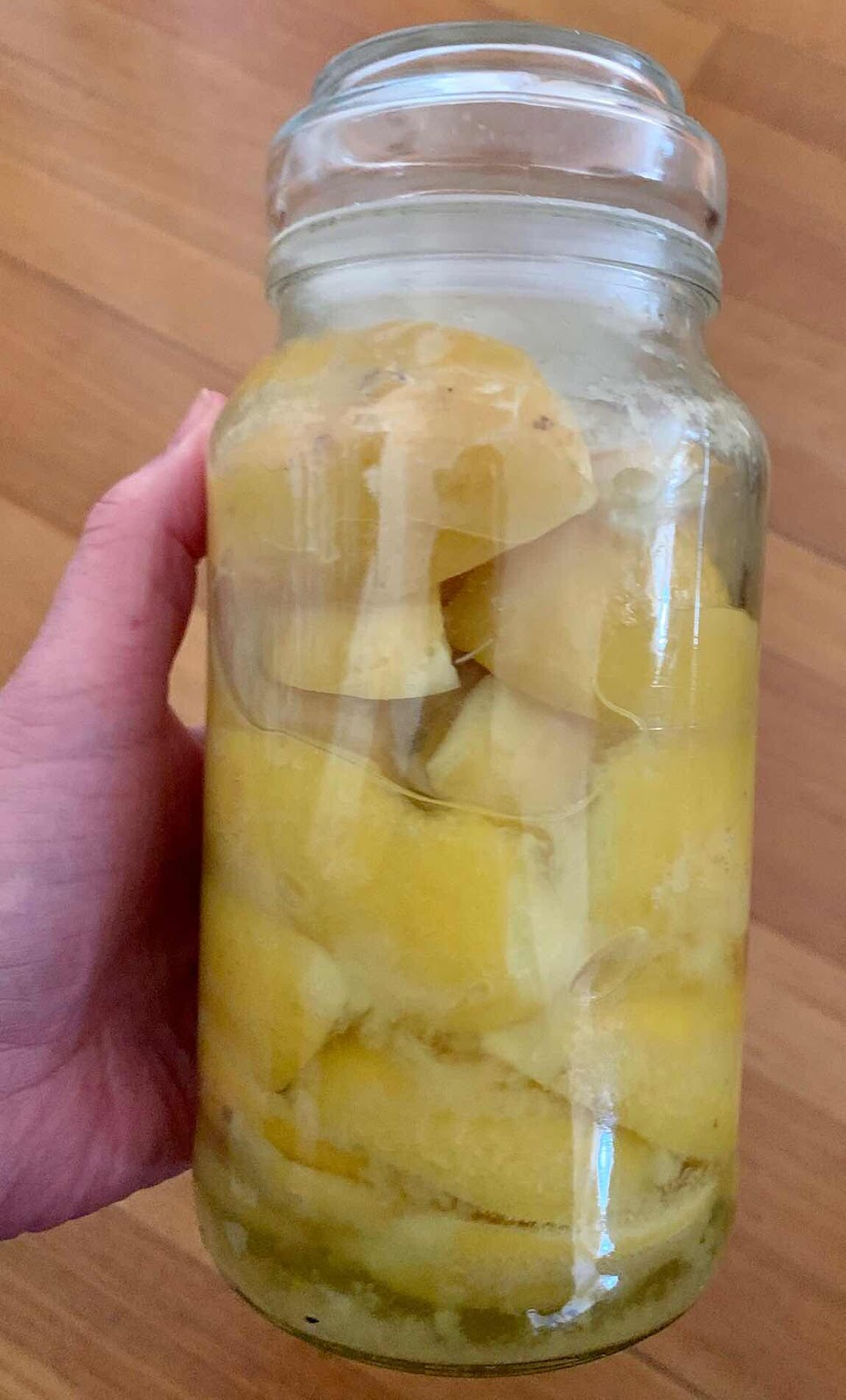


And whilst on the citrus theme I thought an inspection of the preserved lemons was a good idea.  I have finally found the perfect jar for the preserved lemons, Moccona coffee jars with the plastic seal on the lid. They tick all the boxes, recycled jars, easily sterilised in the oven if you remove the plastic lid and sterilise with boiling water and best of all non corrosive. The recipe for preserved lemons along with other ways to use up bountiful citrus crops can be found here


Monday, 13 April 2020

Tomato Balchow

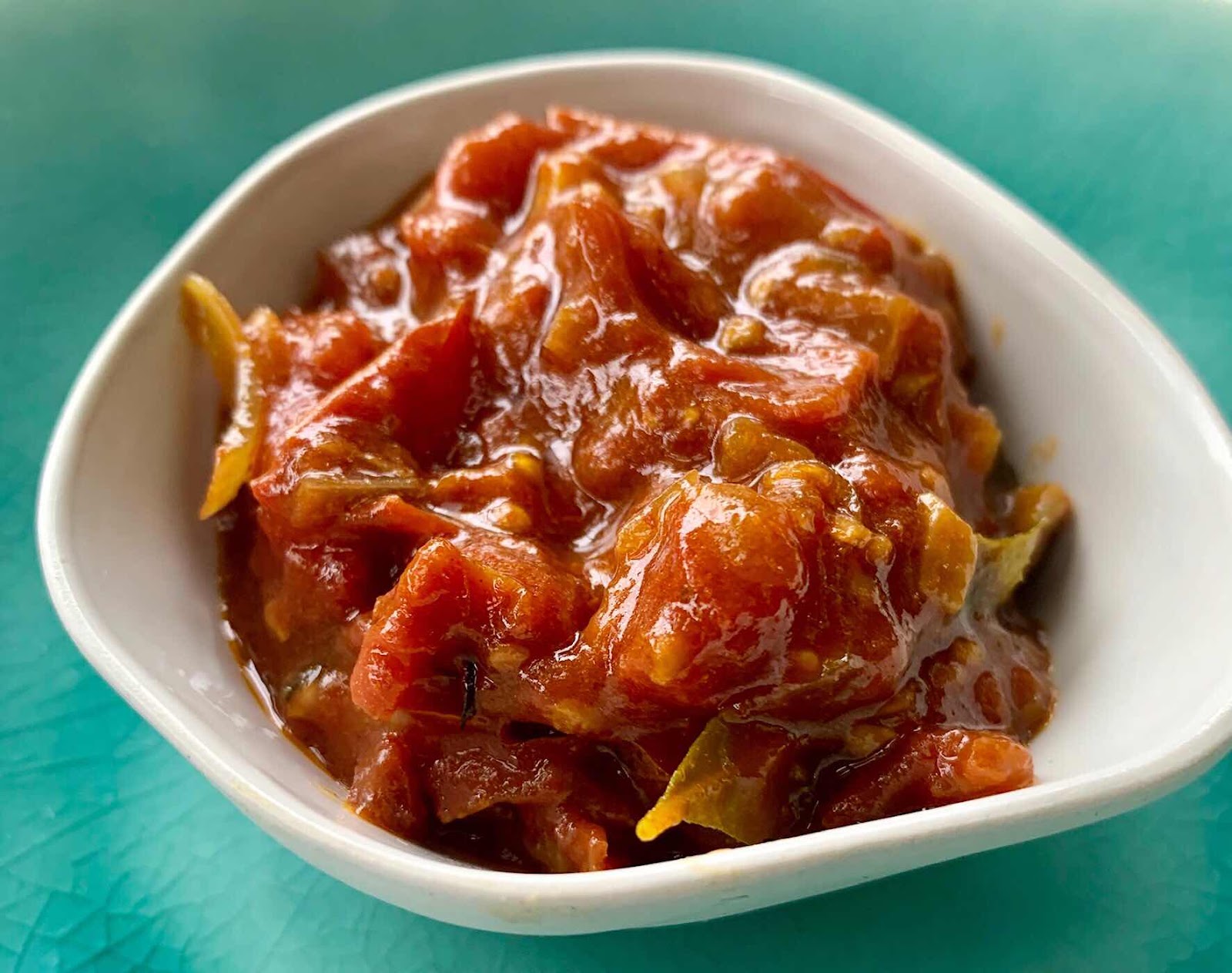
This is a the perfect recipe for using up the last of the tomato crop, better still the tomatoes are not peeled or seeded.


 Originally from my friend Lariane, who got it from her mother who got it from her Aunty and loosely based on a Goan recipe for Balchow (Balchao). Reflecting the true nature of sharing; both recipes and produce and of course each recipient has tweaked it slightly to suit themselves. I usually double or triple the recipe and as I like hot food use a generous amount of chilli.


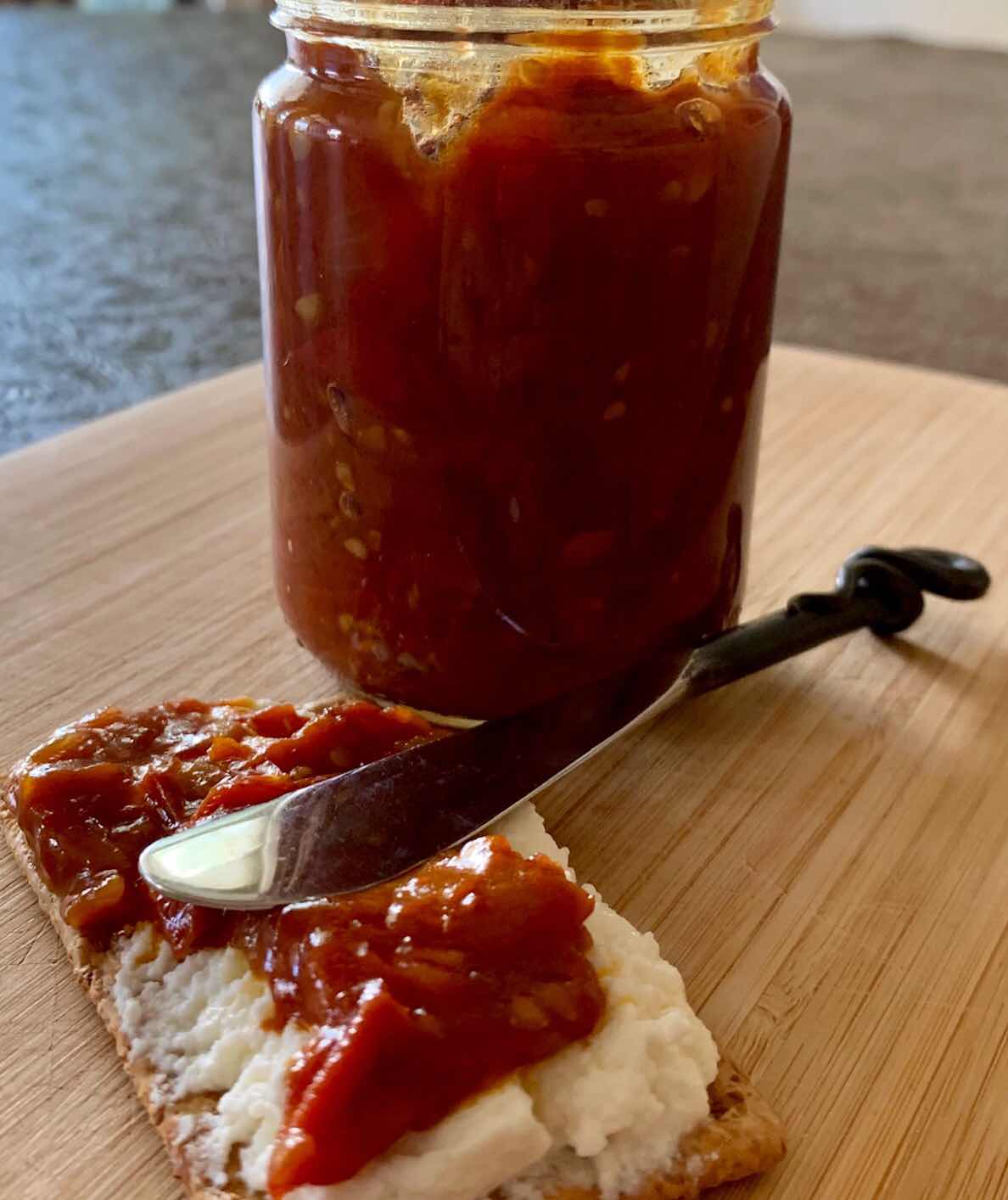
Use as you would any chutney but I really like it on crusty bread or crackers with fresh ricotta. 


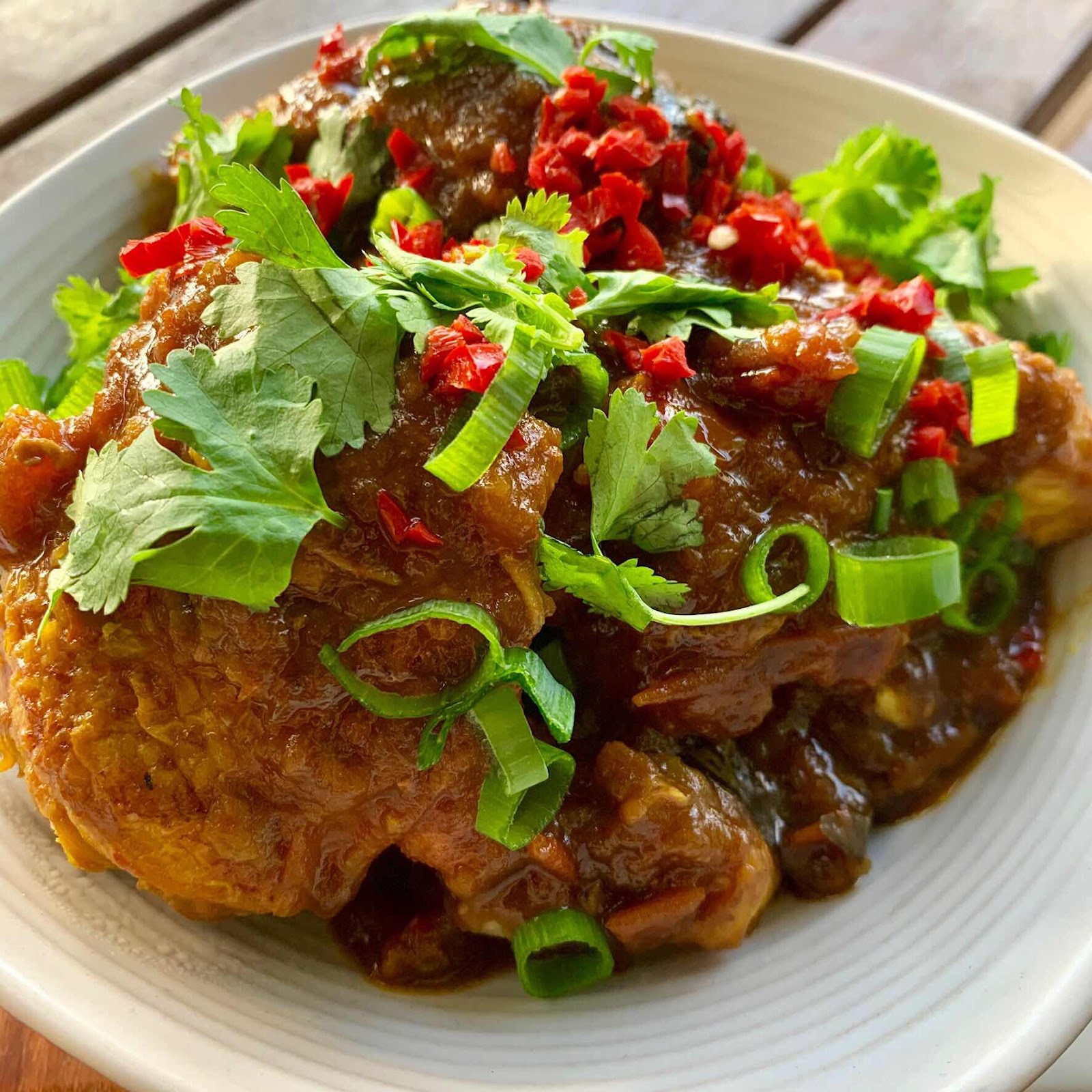
It also makes a good base for a simmer sauce.


Tomato Balchow
1 kg tomatoes
2  red onions
6 cloves garlic
1 tablespoon turmeric powder
Chilli flakes or fresh chilli to taste
½ cup malt or balsamic vinegar
¼ cup sweet sherry
1 tablespoon brown sugar
2 teaspoons salt
Oil to sauté onion
Fresh curry leaves (optional)

Chop onions finely, crush garlic and sauté in oil until soft and starting to colour.
Add remaining ingredients and simmer until mixture is thick.
Pack into sterilised jar and store in the fridge or pack into a freezer container and freeze. This makes 2-3 jars.


To use as a simmer sauce
Brown one thinly sliced onion and your preferred protein, I have used chicken, prawns and tofu. Add approximately one third of the tomato balchow and enough water to create a sauce. Simmer until the chosen protein is cooked. Serve with rice, green vegetables or salad.


Thursday, 21 March 2019

Passionfruit Spread

I love it when friends turn up with a bountiful supply of passionfruit, it means that I get to make passionfruit spread. I only make this spread in small batches and use it up quickly, each batch uses half a cup of passionfruit pulp. Cornflour is used to stabilise the spread, however,  it can be made without it. Whenever I get lots of passionfruit I freeze it in half cup blocks and then  defrost a block to use to make another batch. I love this spread as a layer on pavlova or in sponge cake or as a filling for small tarts.


The spread is thick and each batch makes one jar.


Spread a layer over the pavlova, top with unsweetened whipped cream and then more fresh
passionfruit.


It is delicious on toast or crumpets


Passionfruit Spread
1/2 cup passionfruit pulp
1/2 cup caster sugar
60 g butter, melted
2 eggs, beaten
2 teaspoons cornflour (optional)

Combine all ingredients in a microwave safe /heat proof bowl ( I use a Pyrex jug) and mix well. If using cornflour mix it into the passionfruit before adding the remaining ingredients.
Microwave on high in one minute increments until the mixture has boiled and thickened, whisk at each increment.
Place spread in a clean and sterilised jar. Store in the fridge. Use within ten days.


Friday, 31 August 2018

Citrus Chutney

Our citrus crop has been exceptionally bountiful this year, loads of oranges and more limes than we and the neighbourhood can handle. There are containers of juice and rind in the freezer and the usual range of marmalades, butters and citrus based cakes and tarts have been made.  With so many limes to be used up I decided to make some Lime Chutney. It is a less astringent version of my lime pickle and a small amount with a curry really adds a wow factor.


Lime Chutney
Step 1
750 g limes, finely chopped or combination of limes, oranges and lemons
2 tablespoons salt

Step  2
Limes from step 1, rinsed
1 1/2 cups sugar
3 cups apple cider vinegar
1 tablespoon green ginger, finely chopped
1 tablespoon garlic, finely chopped
1 tablespoon turmeric powder
1 tablespoon brown mustard seeds
1 tablespoon coriander seeds
2 teaspoons cardamom powder
1  2 teaspoons dried chilli flakes
2 teaspoons fenugreek powder
2 teaspoons nigella seeds
2 teaspoons smoked paprika
1 teaspoon asoefoetida powder (optional)
1 tablespoon of salt


Method
Step 1
Wash the limes and finely chop the limes or citrus. I used a food processor and the pulse function
Place chopped limes in a non reactive bowl (stainless steel, glass or plastic) Add the salt and mix well. Allow the mixture to stand for 24 – 48 hours.
Drain of liquid, rinse well and drain again. Repeat two or three more times. This is important to remove the bitter flavour and salt.

Step 2
Combine lemons and remaining ingredients in a saucepan. Bring the mixture to the boil and then simmer for 30 minutes or until thick. Stir often as it will tend to stick as it thickens
Spoon into sterilised jars. Seal.


Monday, 26 February 2018

In a Pickle


These only get made when my friend Helena arrives with a bag of her smallish and delicious home grown cucumbers. Today was one such day,  pickled within hours of being picked. They are ready to eat after one day and keep for months. I like them on crusty bread and butter, in sandwiches, with cream cheese and in burgers. A few tablespoons, chopped and mixed into potato salad is also delicious.


It is important to have thinly sliced cucumbers


Salting the mixture draws the moisture out of the cucumbers


The pickling mixture


The cucumber mixture is added to the pickling mixture


Then cooked for about ten minutes until the cucumber turns translucent 


The cucumber pickle is cooled and then packed into sterilised jars.


Pickled Cucumbers
(Bread and Butter Pickles)
Part 1
1 kg small green cucumbers
4 small brown onions (250g)
2 tablespoons salt
Part 2
1 ½ cups apple cider vinegar
1 cup sugar
1 teaspoon turmeric powder
1 teaspoon mustard powder
1 ½ tablespoons mustard seeds
1 teaspoon celery seeds or fennel seeds
¼ teaspoon chilli flakes (optional)

Method
 Part 1
Wash cucumbers and remove ends. Thinly slice cucumbers on a mandolin or use a food processor.
Peel onions and cut in half and thinly slice to form half circles. Thinly slice cucumbers on a mandolin or use a food processor.
Place cucumbers and onions in a non reactive bowl (glass/plastic/stainless steel). Add salt and enough water to just cover the cucumber mixture. Leave for at least two hours or over night and then drain.
Part 2
Place vinegar, sugar and spices in a pan large enough to hold the cucumber mixture. Bring the vinegar mixture to the boil, stir and simmer until the sugar is dissolved.
Add the cucumber mixture and cook gently for 10 -15 minutes, stirring occasionally to ensure all the cucumbers are evenly cooked in the pickling mixture. The green will turn more olive and the flesh will become more translucent.
Cool until lukewarm and pack the cucumbers into warm, sterilised jars. Pour any liquid over to fill jars but not overflowing.

Seal jars when the mixture is cold. 

Sunday, 25 September 2016

Chilli Oil

Sometimes I have guests who do not eat chilli. A little drizzle of this will lift a dish without the need for chilli in the cooking. Simply pour some of oil over an individual meal, a few drops to start with so that you get the amount of chilli you like.


I make a big bottle once a year, allow it to infuse for twelve months or so, then strain and use the oil over the next year. The process is very simple. The jar should be packed with chillies so choose a jar that is the appropriate size. I often make smaller jars so that I can do a taste testing throughout the year.

How to

Sterilise the jar(s)

Wash and dry the chillies


Blanch the chillies in a mixture of boiling vinegar and salt. I use 1 1/2 cups vinegar and two tablespoons of coarse salt. 


Blanch the chillies in batches, remove from the vinegar solution and place on paper towel.


Pack the blanched chillies into the sterilised jar. Pour olive or grape seed oil into the jar making sure that the chillies are fully submerged. Seal the jar and store in a cool cupboard. Over time the colour of the oil will gradually become pale red and develop a hot chilli flavour. This takes a long time, at least twelve months.

Strain the oil into a sterilised bottle.


Sunday, 5 June 2016

Something New

I am not one for change, however, sometimes it is forced upon me. This week we had to replace our microwave. The man and I dutifully tripped off to the appliance store. The staff were friendly and helpful and there were lots to choose from. The attentive and helpful salesman was somewhat bemused by the idea that our microwave was at least twenty eight years old. Wow, 'older than me' he said and followed it up with 'none of these will last that long'. Quick to make a joke I replied ' that's OK, neither will we'.  Having ascertained that we really only used it to reheat and were further constrained by the space that the microwave needed to fit into,  reduced our options significantly.


The new microwave. It is quite good to be able to select time in seconds rather than guessing and counting 


As I did with the old. We were slow to embrace the technology but these days cannot imagine not having one. I love the ease that microwaves offer to easily reheat a meal.


Also recently replaced. This is my new food processor, a fancier version of the old. The most used piece of equipment in my kitchen. I confess that I haven't used the additional features all that much. 


The pastry for these little tarts was made in the food processor and the lime curd filling (recipe below) in the microwave.  


I always melt chocolate  and make ganache icing in the microwave.


My life is made much easier by being able to reheat a meal.


This spread makes a good filling for pre baked tart shells, crepes and  sponge cake and it is very easy to make.

Lemon/Lime Spread

125 g butter
½ cup caster sugar
125 ml lemon /limejuice
Fine zest of the lemons/limes
2 tablespoons cornflour
2 large eggs

Method
Melt butter

Whisk lemon juice, rind, sugar and cornflour together, add eggs and whisk again.

Combine lemon mixture with melted butter, mix well.

Microwave on high for one minute, whisk and then for thirty seconds at a time, whisking each time. The total cooking time is about 3 minutes. ( 1minute plus 4 x 30 seconds). The finished spread will be thick.

Refrigerate.


Wednesday, 18 May 2016

Lime Pickle

Our lime trees are coming along nicely but have not produced large crops thus far, however, my friend Helena has a very bountiful lime tree and a shared passion for lime pickle. This is a delicious condiment to serve with Indian curries. The pickle has quite a strong flavour. Place a small bowl on the table and encourage people to help themselves to a small spoonful. The amount of chilli can be varied. Taste and add a little chilli powder or more dried chilli flakes if you prefer a very hot pickle.


Asoefoetida has a very distinct odour and flavour, use less rather than more or it can be omitted. Mustard oil can must be heated and then stirred into the pickle. Both can be purchased at Indian grocery stores. 


Simmer the pickle until the limes are soft. Use a large pan as the pickle tends to splatter.

Lime Pickle
24 limes
30 red chillies*
1 tablespoon brown mustard seeds
1 cup oil.
2 teaspoons salt

I have also used dried chilli flakes, approximately ¼ cup.


1 tablespoon turmeric powder
2 -4 teaspoons fenugreek powder
1 teaspoon asoefoetida powder - optional
2 tablespoons mustard seed oil - optional


Method
Wash limes, trim the ends and then cut each lime into eight pieces

Place half the oil in a large pan, heat and then add the mustard seeds, turmeric and fenugreek and fry for a minute or do until fragrant. Add chillies and asoefoetida , cook until chillies have softened.

Place chillies and spice mixture in a food processer or blender and pulse to make a coarse paste. This step can be omitted if dried chilli flakes are used.

Return chilli paste mixture to the pan, add the chopped limes, salt and remaining oil. Bring the mixture to the boil, reduce heat and simmer until limes are soft, approximately twenty minutes. Stir often as it will tend to stick as it thickens.

Heat mustard oil in a separate pan. Stir into lime pickle.

Cool slightly and spoon the pickle into dry sterilised jars. Allow the pickle to fully cool then seal. I use Kleerview covers / cellophane and a lid. Label jars and store in cupboard. Refrigerate once opened.

The pickle can be used straight away but is best left for a few weeks.

Makes approximately 8 jars


Saturday, 9 April 2016

Zucchini Preserved in Oil

This is a good way to preserve the last of the zucchini or better still make this earlier in the season when they are more plentiful and you are looking for something to use up the crop. This time I used a combination of yellow and green zucchini, however, I usually just use the green. It is great on the anti pasto platter and a small jar makes a nice gift.


Served here with some of my olives, octopus and some soft goat cheese. Add some cured meats such as prosciutto or salami and crusty bread for a more substantial snack or light meal.

This is the Process

If possible try to harvest zucchini while young and not too big. Slice each zucchini into rounds approximately 3mm thick. If zucchini are large cut the zucchini in half or quarters lengthways and then slice.


Use a non reactive bowl. Place sliced zucchinis in layers, cover each layer liberally with salt - you need lots.


Cover the zucchini slices with plastic film.


Place a plate on top.


Weight the zucchini down. I use bricks, usually four. The weights need to be heavy. Leave zucchini for 24 hours.

Remove the bricks, plate and plastic film. Drain of any liquid.


Cover the zucchini with white vinegar. I used a 500 ml bottle. Mix thoroughly and allow to stand for an hour or so. Repeat the process of covering the zucchini with plastic film, a plate and bricks and leave for a further 12  - 24 hours.

Remove bricks, plate and plastic film.

Drain any vinegar  and squeeze out the zucchini. I wear disposable gloves for this.

Pack zucchini slices into sterilised glass jars, add some slivers of garlic, a dried chilli. Make sure that the zucchini is approximately 1 cm  from the top of the jar. Pour olive oil into the jar. The zucchini need to be fully submerged. Use a spoon to press down on the zucchini . 

Seal and store in a cool place. 


Wednesday, 17 February 2016

Olives

Rarely can I resist the offer of some produce and such was the case with the two kilograms of black olives that were offered by my friend Nicole a couple of months ago. Two months in the making but well worth the wait.


The process of preserving olives is not difficult. It is a little time consuming part to cut a slit into each olive, however, once this is done there is relatively little work involved. This batch was made using the hot brine method.

The Process
Stage One


Sterilise the jar.

Wash olives, cut a slit into each olive and pack into the sterilised jar.


Make the brine solution and pour the hot brine over the olives. Leave olives for four to six weeks.


Make sure the olives are fully submerged. I cut a disk of plastic and push holes into the plastic with a skewer. The plastic will bend and you can get it into the neck of the jar and place it over the olives. The plastic acts as a weight and keeps the olives under the brine.

Stage Two

After four  to six weeks drain olives.

Return olives to jar and cover with vinegar. Leave overnight or for a day or two.

Stage Three

Drain olives.

Wash, dry and sterilise the jar.

Place a layer of olives into the cold sterilised jar. Add a chilli, bay leaf and a few slivers of garlic.


Continue to fill the jar by adding layers of olives with slivers of garlic, chilli and bay leaves.


Once all the olives are used up fill up the jar with good quality oil. I use grape seed but olive or light olive could also be used.

Place the plastic weight back into the jar and leaves olives for a couple of weeks before using.

Use a slotted spoon to remove the olives. The oil can be strained and used for cooking and dressings.


//